Saturday, May 17, 2014

Gary Becker RIP

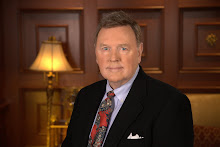
Gary Becker is not a household name. Few economists are. So when he died on May 3rd I initially hesitated in deciding if his outstanding career accomplishments had enough interest to be suitable for a blog. Only after reading a couple of dozen eulogies published upon his passing did I conclude Becker’s story deserved telling regardless of his general renown.

Becker’s mentor, University of Chicago Nobel laureate Milton Friedman, an economist who is widely known in the business community, called him “the greatest social scientist of the last half century.” Apparently Friedman thought “economist” was too narrow a category to corral Becker’s fecund mind. “Gary Becker may well go down in history as the chief architect in the designing of a truly general science of society,” said another mentor and University of Chicago Nobel laureate, George J. Stigler.

When he was selected to receive the Nobel Prize in 1992, Becker told an interviewer, "I was interested in social problems but felt that economics had the tools by which to handle these long-term interests and social questions." Indeed. He created so many new fields for economic inquiry that in awarding Becker the Nobel prize the committee had to create a new category for his work, recognizing him for “having extended the domain of microeconomic analysis to a wide range of human behavior and interaction, including nonmarket behavior.” In the past, winners were chosen for a specific piece of work; Becker was chosen for many innovative works.

As to making the best decisions for society, Becker, a free market libertarian, trusted the imperfections of markets rather than the imperfections of government regulators. His choice of market solutions over government-run solutions was based on analytic study, not ideology. Nevertheless it put him on the wrong side of the tracks as far as the Left was concerned, for whom more government is always the solution. Until he saw how badly government managed it, Becker confessed several years ago that he initially supported the Iraq war.

His work was controversial, offending non-economists with, for example, suggestions that decisions like marriage, having children, immigration, crime, and drug trafficking, among many other social issues, could be analyzed as economic choices, no different – some would say – than buying a house or a bag of groceries. Critics thought his ideas patently absurd. Never mind that marriage and divorce, having and parenting children are profoundly economic decisions at their core.

Becker fended off critics who argued that social decisions were not rationally made. He described the “marriage market” for example:

It's not an organized market the way the stock market is or a bazaar is in the Middle East, but it's a market nevertheless with the property that there are different people in this who are looking to get married. Not everybody can marry the same wonderful man or woman, and they have to make choices. And they may have met somebody who they're pretty happy with. They wonder about whether if they'd waited they'd meet somebody better, and these are the kinds of choices one makes in other markets. So using market as a metaphor, but I think it's a very good metaphor for what goes on here.

Becker opposed the redistribution of incomes by government social engineers who defended it saying redistribution is the “fairest” solution for combatting rising income inequality in the US. Becker’s rationale was firmly supported by economic analysis rather than emotional “do-goodism” typical of government solutions. "I think inequality in earnings has been mainly the good kind," Becker said. How could inequality be good, lamented the social architects who believed every child deserved an “A” and every youth team should be awarded a winner’s trophy?

Income inequality rewards those with more education, according to Becker, and rewards people who possess more skills to create more value in the world. Yes, the rich get richer and the poor get poorer. Becker knew that from his research. But "If you're in an environment where knowledge counts for so much, then if you don't have much knowledge, you're going to be a loser," Becker says. The poor fall behind because the rich are better educated in marketable skills. The gap creates the right kind of incentives, not the kind government creates in tax policy which penalizes the most successful and rewards the least successful. The poor know that more skills and education are the key to getting ahead. When they respond to that incentive, society benefits, which is good even if some choose to be left behind.

"Well, it's unfair," Becker agreed. "The accident of birth, the accident of the genes we have, the accident of parents we have: It is unfair." So should government impose remedies to compensate for the inequalities of parents and genes? Should we switch babies as Plato suggested? Who wants to live in a world that equal?

Yet, government intrudes with its typical meat-axe solutions designed to override choices people make in its quest for a fairer economy. Fairer by whose standards? Fairer for how long? Forever? Isn’t that called a subsidy? Government solutions that combat society’s “bad” choices are always a dangerous step in infringing everyone’s freedom. Taking money from one group to give to another, Becker said, was an ill-advised unbalancing of incentives that are naturally in place. Knowing the government will protect them for making bad choices, what incentives will high school graduates have to work hard at getting more education or skill training instead of taking a dead-end job? Choosing less education and training deprives society of a more competitive workforce. The economy grows slower. Everyone is penalized in the long run. Thankfully few people choose that route. But, in Becker’s view, the less educated and less skilled should be penalized until they choose to make better decisions. That’s the best incentive. Government doesn’t have a better one.

Becker wrote his doctoral dissertation on the economics of discrimination – an area of society overgrown with government interference and regulation. He challenged the idea put forth by Karl Marx that the person who discriminates gains advantage by exercising bias. But Becker argued that employers who refuse to hire qualified people simply because of their skin color will ultimately lose out to competitors in a free market. Discrimination is less likely, Becker said, in highly competitive industries because survival and prosperity depends on hiring the most qualified people regardless of skin color. Professional sports is a case in point. Over 70% of the players are black. In contrast, Becker noted, government-regulated industries are less competitive and therefore more likely to discriminate covertly if not overtly.

Take the current scandal set off by Don Sterling’s surreptitiously taped remarks, for example. The media stoked his off-hand comments into a firestorm to show he was a racist. Sterling is the owner of the Los Angeles Clippers basketball team. No one would conclude, however, that he was a racist by looking at his team make up, which is essentially all black. No one could conclude that he was racist by looking at his pay structure – the top three players, each black, make $46 million, 63% of the total salaries paid to the 18 players on the team.

Regardless of what Sterling says, what he does is guided by sound non-racial economics. An all-white or mostly-white team would not be competitive. He knows that. It didn’t take government meddling to achieve a non-racial team make-up. A competitive market did it. Sterling, however, has now been banned for life by the NBA and the association of team owners is investigating ways it can legally force Sterling to sell his team. For what? For a stupid remark he made, which his actions put to the lie? If “right thinking” is to be policed, let’s start with Congress and White House, and don’t leave out the Supreme Court.

I don’t have enough space in this blog to show the insight Becker brought to understanding crime and punishment, human capital, marital decisions, and the drug war to mention a few social issues that yielded to his applications of economic analysis. Illegal drug trafficking and the crime it spawns exist because a market for drugs has been created by current laws. Eliminate the illegal market by legalizing drugs, Becker proposes, and the profit leaks out of illegal drugs and the attendant criminal activity diminishes. In time the demand for legal drugs would shrink and crime would vanish.

At its core, the decision to commit a crime is an economic decision, according to Becker. The benefits of the crime are weighed against the probability of being caught and the consequences of punishment. The reason crime exists in many segments of society – from white collar, to street crimes, to violent crimes – is that the benefits far outweigh the costs. Combating crime, Becker recommends, requires increasing the probability of punishment and its severity.

Why do we have a healthcare system whose costs are consuming our GDP? Because government has interfered with the systems to deliver it. Government has created incentives that drive healthcare costs up by preventing health insurance from being sold across state lines, mandating minimum coverage, creating a malpractice industry, insuring more than catastrophic losses, paying the insurance expense for one group by taxing its cost from another group – to name a few government-sponsored abuses. Real Becker-based healthcare reform would rid the system of these perverse incentives. That isn’t likely to happen because government would have to limit itself.

Many of Gary Becker’s insights and recommendations were controversial when proposed and all were unorthodox. He forced ideologues to argue their solutions with facts and to turn them into policy solutions as he did. While he never was able to overcome critics’ resistance to his attempts to revolutionize social policy he revolutionized its rhetoric.

If you want to read a book that applies economics to non-economic problems as Becker did throughout his career, read Freakonomics. The author Steven Levitt is a former Becker student.

Levitt and a colleague analyzed which economists have had the greatest impact on society as measured by citation frequency in research papers by authors published in the top journals in recent years. Becker was the leading economist with thirteen of his works cited. No other economist had more than three or four works cited.

From the time that his doctoral dissertation was accepted, Gary Becker produced a continuous stream of influential work averaging two original researched books in each of the six decades his career spanned before death claimed him at age 83. No other economist has had such output.

My Ph.D. is in business, not economics. Nevertheless we studied his emerging work when I was in graduate school. Even 40 years ago, his ideas were inspired.

Saturday, May 10, 2014

Kerry’s World

The meaning of words often becomes muted when they fall out of common usage. So while I knew the general sense of the word, “apartheid” I refreshed my understanding with this definition from Wikipedia:

Apartheid an Afrikaans (Dutch-German) word meaning "the state of being apart." literally "apart-hood" … a system of racial segregation in South Africa enforced through legislation by the National Party governments, the ruling party from 1948 to 1994, under which the rights of the majority black inhabitants were curtailed and Afrikaner minority rule was maintained. Apartheid sparked significant internal resistance and violence … Since the 1950s, a series of popular uprisings and protests was met with the banning of opposition and imprisoning of anti-apartheid leaders [Nelson Mandela among them]. As unrest spread and became more effective and militarized, state organizations responded with repression and violence.

Two weeks ago Secretary of State John Kerry gave a closed-door briefing of the Israel-Palestine conflict in which he said,

If there’s no two-state solution to the Israeli-Palestinian conflict soon, Israel risks becoming “an apartheid state” … A two-state solution will be clearly underscored as the only real alternative. Because a unitary state winds up either being an apartheid state with second-class citizens – or it ends up being a state that destroys the capacity of Israel to be a Jewish state

The modern state of Israel is home to about as many Jews as the Nazis destroyed in the Holocaust. Few more inflammatory metaphors could have chosen by the bumbling Kerry to label the Israeli position in the Palestinian conflict than “apartheid state.” No other ethnic group has been victimized more by racial hatred for over 2,000 years. Was this a Freudian slip? It made me wonder what sub-conscious anti-Semitic prejudices Kerry may be harboring.

Predictably the outcry was loud and immediate. And just as predictably the Kerry State Department issued a denial that he’d said what he’d said.

“The Secretary … did not state publicly or privately that Israel is an apartheid state …,” State Department spokeswoman Jen Psaki said. Unfortunately, Kerry had been taped so there was no denying what he said. Hmmm. No doubt smoke poured from Ms. Psaki’s ears as she pondered the dilemma. Then she came up with this beaut:

“He certainly didn’t say ‘is.’”

This sort of rhetorical silliness is reminiscent of Clinton’s obstruction of justice word-parsing: “It depends on what the meaning of the word 'is' is” and Kerry’s, "I actually did vote for the $87 billion, before I voted against it."

Not to be outdone by her boss in the monthly State Department “Foot in the Mouth” contest, Spokeswoman Psaki was quick to assert the “some of his best friends are Jewish,” defense. Well, la-dee-da!

“…If I could rewind the tape,” Kerry later told his critics, “I would have chosen a different word to describe my firm belief that the only way in the long term to have a Jewish state and two nations and two peoples living side by side in peace and security is through a two state solution.”

Israel is a country smaller than the state of New Jersey. At one place, it is only nine miles wide. Its population is eight million people, of whom six million are Jews. The rest are non-Jewish immigrants related to Jews, Israeli Arabs, Christians, and Druze. The Arabs participate in and are protected by Jewish law and democratic processes. It appears to me that some non-Jewish groups are already living side-by-side with the Jews as Uncle Kerry and Papa Obama want.

It’s their neighbors living in the Gaza Strip, the West Bank, and Lebanon, however, that are the troublemakers. Hamas and the PLO have launched 10,000 rockets into Israel hitting homes, synagogues, hospitals, schools, and villages. It’s not the sort of place that John and Teresa Heinz Kerry or Barry and Michelle would choose to live. But Team Obama/Kerry have no qualms about telling the Jews how they should live. Both have asked the Israeli government to give up more land and move in a little tighter. It does make the Jews an easier target, don’t you think?

The Palestinians hate Jews so much they won’t take sovereign control of any territory ceded to them unless all Jews are expelled – just abandon your home and move in with other Jews, like you did in the Polish ghettos when the Nazis wanted you out of designated Aryan territories. Remember Schindler’s List? Kerry and Obama say this would pave the road to peace.

Conveniently ignored by Kerry and Obama is the Clinton-engineered 2000 Camp David Summit which Yasser Arafat, the Soviet-trained terrorist, scuttled. Clinton later wrote in his book My Life that Arafat complimented him saying, "You are a great man," to which Clinton responded, "I am not a great man. I am a failure, and you made me one." Middle East negotiator Dennis Ross also later wrote that Arafat shot down the peace solution because he didn’t want to shut off the ability to make more demands later, especially the “right of return.” Arafat wanted a one-state solution, not a two-state side-by-side solution. Until there was a single Arab state encompassing all of the historic Palestinian territory, there would be no solution on Arafat’s terms. In other words, no Jews allowed in the Middle East.

Also conveniently ignored is the fact that days before Kerry’s “apartheid” blunder, the 79-year old President of the laughingly named Palestinian Authority, aka the PLO, signed a unity deal with Hamas, their rival terror group, to join forces in destroying Israel. President Mahmoud Abbas of the PA had two choices: break off peace negotiations or be assassinated. The elected Arab mayors of communities in the West Bank, Samaria, and Judea who were trying to live in peace with Israel were knee-capped by Abbas goons. Why isn’t this stuff reported?

The only “apartheid” state in this explosive area is the Arab areas insisting on ethnic cleansing of the 650,000 Jews living in Judea, Samaria, and Jerusalem – the terrorists whose cause Kerry and Obama are championing.

A question for the geniuses in Foggy Bottom: what does the economy of the Palestinian Arab territories produce – i.e. what are its main industries? The economy of Israel mirrors the modern world as evidenced by its GDP per capita of $32,000. The GDP of the Palestinian-controlled territories is less than $2,000 per capita, a third of which is foreign aid, since the Palestinians are the world’s largest per capita recipients of it. It’s a welfare society. Why? Because a significant part of its human capital is not deployed into productive work. It’s engaged in violence – fighting its neighbors, the Jews. Since the creation of modern Israel in 1948, generations of Palestinians have known no other enterprise except fighting. Most notably this is true among Arafat’s PLO fighters. War is the main industry of the Palestinians.

It’s a fool’s errand to debate whose land it is. That’s not the issue. Civilizations had occupied it before Joshua’s conquest of the Canaanites around 1300 BC and civilizations occupied it up to the Ottoman Empire, which lost it in WW I. Someone has always taken it from someone else. But it’s always been God’s land in my book. The land dispute is what it is. Is a peaceful resolution possible?

If a peaceful resolution isn’t possible, and it doesn’t appear it is in current circumstances, then the contestants must fight until there is a winner. That’s the way most disputes are resolved absent a peaceful solution. It wouldn’t be my choice, but I don’t live there. Neither do Kerry and Obama.

Although Kerry hasn’t said so directly, he has implied that no resolution is possible with the current leaders of Israel and the Palestinian Authority. Kerry said if “there is a change of government or a change of heart, something will happen.” But I’m not sure that dog hunts. Over the history of the conflict, Israel has been led by governments on the right, left, and center – all of which negotiated unsuccessfully with the Palestinian representative of their time. Not so with the Palestinians who have always been led from the left and negotiated accordingly. The problem isn’t Netanyahu.

But if regime change is what Kerry thinks is needed, I’d agree. Get rid of Kerry and Obama. Kerry’s Manichean world exists nowhere, least of all in this part of the world. And Obama doesn’t like Netanyahu, has no respect for Israel or its historic relationship to the land, and sees no advantage to a democratic island in the Middle East. If anything, Obama and the Clinton/Kerry State Department would like nothing less than an isolated, humiliated Israel. Getting rid of Obama and Kerry would be progress because no one could be worse for Israel than theses two.

Obama has destroyed any sense of this country’s historic support of Israel, support which poll after poll confirms. What I can’t understand is why 80% of American Jews keep voting for Democrats who don’t support the nation of Israel. Good grief, the Jews in Congress, 99% of them Democrats, don’t support the nation of Israel!

So, yes; let regime change happen – in 2016!

Saturday, May 3, 2014

The Unwise Latina

In 2006 the voters of Michigan approved by a margin of 58% to 42% a state constitutional amendment outlawing race-based preferences. Alleging that in passing an equal protection amendment, Michigan voters had violated the equal protection rights of minorities (I’m not making this up) an affirmative action group sued Michigan voters.

Two years ago the 6th Circuit Court of Appeals agreed 8-7 that Michigan voters violated the Equal Protection Clause of the 14th Amendment by mandating equal protection and struck down the amendment. Michigan’s Attorney General took the appeal to the Supreme Court, which two weeks ago ruled 6-2 in his favor to let the amendment stand.

Not without fireworks, however.

Today – almost 60 years to the day since Brown v. Board of Education was decided, and only two months short of the 50th anniversary of the 1964 Civil Rights Act – there exist people who believe that the vestiges of institutionalized discrimination from two generations ago (before Brown and CRA) still remain, justifying continuing state-sponsored discrimination for racial minorities. Unfortunately some of those people wear black robes and sit on court benches. Sonia Sotomayor is one of them.

The Supreme Court’s Michigan ruling two weeks ago was not sweeping, though many (including me) thought it should have been. It did not strike down the discriminatory practices of universities using affirmative action in the 42 states that don’t ban it, for example. It said Michigan could amend its constitution outlawing race-based preferences via ballot initiative. The opponents of the Supreme Court Michigan case, including Sotomayor, clearly had no problem with discrimination – as long as it favored minorities. When it didn’t favor minorities, they had a problem.

The metronomic swing voting Anthony Kennedy joined Alito and Roberts while Scalia joined Thomas to make the majority. But surprisingly the reliably liberal Stephen Breyer also joined the majority. Thus three different majority opinions were written explaining why the Right was, well, right, leaving Sotomayor and Ginsberg alone on the Left, for whom Sotomayor wrote a withering 58-page dissent. Kagan recused.

While dissenting opinions are normally short philosophical statements of “this is why I voted as I did” and sometimes include “this is why I think the majority is wrong, “ Sotomayor’s dissenting opinion was a tirade – longer than the total of the majority opinions in this decision. Moreover, she read the entire dissent from the bench – an unusual but not rare practice – to demonstrate how wrong she thought her six “colleagues” were, especially Chief Justice Roberts, who she called out, albeit not by name, for special ridicule.

The core of her vituperation slapped Roberts for being “out of touch with reality,” Stephens for being willing to “sit back and wish away” discrimination, and Scalia for believing that race-sensitive admissions policies “do more harm than good” and his assertion that Michigan residents favored a colorblind constitution and "it would be shameful for us to stand in their way."

Thus, Sotomayor opened fire on race neutralism:

My colleagues are of the view that we should leave race out of the picture entirely and let the voters sort it out. We have seen this reasoning before.  

Hinting that the majority’s decision supporting Michigan voters will return the Nation to Jim Crow racism, Sotomayor argued that the voters’ choice to end racial discrimination was an act of racial discrimination and that the only sure way to end such racial discrimination is by mandatory (court-ordered) maintenance of racial discrimination. She didn’t use those words, but the intent was clearly there in the last paragraph on page two of her dissent, which is available at the hyperlink above.

Sotomayor mocked Roberts’ oft-quoted dictum that "The way to stop discrimination on the basis of race is to stop discriminating on the basis of race," which he wrote in the Seattle School District case. She called his thinking “out of touch with reality.”

[Quoting Roberts] “The way to stop discrimination on the basis of race is to stop discriminating on the basis of race.” It is a sentiment out of touch with reality… The way to stop discrimination on the basis of race is to speak openly and candidly on the subject of race, and to apply the Constitution with eyes open to the unfortunate effects of centuries of racial discrimination.

Race matters, she asserted, with a jab to Kennedy who believed the issue to be decided is “whether, and in what manner, voters in the States may choose to prohibit the consideration of such racial preferences.” She calls his lack of judicial activism “sitting back and wishing away, rather than confronting” racism.

As members of the judiciary tasked with intervening to carry out the guarantee of equal protection, we ought not sit back and wish away, rather than confront, the racial inequality that exists in our society. It is this view that works harm, by perpetuating the facile notion that what makes race matter is acknowledging the simple truth that race does matter.

Roberts felt compelled to defend himself against her scurrilous attack in a rebuttal opinion.

… It is not “out of touch with reality” to conclude that racial preferences may themselves have the debilitating effect … that the preferences do more harm than good. To disagree with the dissent’s views on the costs and benefits of racial preferences is not to “wish away, rather than confront” racial inequality. People can disagree in good faith on this issue, but it similarly does more harm than good to question the openness and candor of those on either side of the debate.

But “good faith” disagreement is not something Sotomayor comprehends. She could take a lesson from the first minority on the Supreme Court, Thurgood Marshall. He was often frustrated by the Court’s opinions related to race, but he never personalized it as she did.

For example, in a case involving bankruptcy, the bankrupt applicant was unable to pay the $50 bankruptcy filing fee, which, his lawyer argued, was denial of due process and equal protection. The lower court agreed but the Supreme Court didn’t. The opinion of the majority argued that he was offered installment payments for the fee that were no more than “the price of a movie or a little more than the price of a pack of cigarettes.” Marshall took offense. He began to write his dissent stridently – “It may be easy for judges with life tenure and a salary guarantee to think that …” but then rewrote a moderate introduction, "It may be easy for some people to think that weekly savings of less than $2 are no burden." He went on to argue that it’s perfectly fine to differ over opinions about what Constitution requires, but it was “disgraceful” to interpret the Constitution with opinions about what poor people are able to do unless one has been poor.

Sotomayor is incapable of that kind of professional politesse – or reasoning.

Scalia also felt Sotomayor should be reprimanded. “As Justice Harlan observed over a century ago, ‘[o]ur Constitution is color-blind, and neither knows nor tolerates classes among citizens,’” Scalia recalled in the Harlan’s dissent written for Plessy v. Ferguson. “The people of Michigan wish the same for their governing charter,” Scalia concluded.

Citing Sotomayor’s dissent introduction, Scalia scolded her assertions, saying that it is “… doubly shameful to equate ‘the majority’ behind [the Michigan constitutional amendment] with ‘the majority’ [on the Court at that time] responsible for Jim Crow.”

Scalia, who doesn’t suffer fools gladly, pointed out in rebutting Sotomayor’s dissent that discrimination is discrimination regardless of its noble motives. If a clearly race-neutral standard happens work for whites and against minorities as an unintended consequence, neither the law nor the court may step in and jigger the standard to eliminate its unwitting “disparate impact.”

Scalia was too charitable to remind the second most junior justice on the Court that the question the Michigan case was narrow: to decide if and how voters in the States may choose to prohibit the consideration of such racial preferences in college admissions – no more, no less. The last time I checked, college admission is not a constitutionally-protected right.

Sotomayor said during her confirmation hearings that “a wise Latina woman with the richness of her experiences would more often than not reach a better conclusion than a white male who hasn’t lived that life” Instead she showed in the Michigan decision what an unwise Latina she really is. She did not judge the case; she argued it. Her abominable racism is no different than the racism she railed against in her dissent.

Sotomayor was never suited to sit on the highest court in the land. There were better qualified, more thoughtful candidates from which to choose. But now that she is there, at age 59, she will have many years and ample opportunities to undermine the constitutional order of this country.

Sonia Sotomayor and Elena Kagan are living proof that presidential elections undeniably have consequences.

Saturday, April 26, 2014

Fun and Games at Census

For over 25 years the Census Department has collected data on health insurance coverage among Americans. The dataset wasn’t without its flaws. For one thing, it over-reported the number of uninsured. That wasn’t all bad for political do-gooders. They often cited it as “proof” that Uncle Sam would do a better job of insuring folks than the private sector was doing. After all, look at the great job government does running the Post Office, Amtrak, and the national retirement plan called Social Security – all bankrupt were it not for the endless flow of cash from tax slaves.

The political winds shifted, however, with the passage of ObamaCare. Now that it has crowded out the private market for individual health insurance – the kind you buy yourself, not through an employer – O’care advocates want to show that Americans are stampeding to sign up for this exciting new government goodie. The last thing Obamakins want is a statistic that inflates the number of uninsured. They now want the uninsureds to be under-reported to substantiate their claim that over eight million people have become newly insured.

Well, we are in Kansas, Toto, where miracles still happen. Last week Census announced that it had re-jiggered the household insurance questions in its Current Population Survey, making it impossible to determine the effectiveness of ObamaCare. 

Unfortunately the data generated from the old and new questions aren’t comparable, so there is no way to compare uninsured numbers before and after ObamaCare to determine if it has made a difference. Aw, shucks. I’m sure this was a coincidence … right before a mid-year election too. And it’s two years before a national election in which no incumbent is running for the presidency … unless Hillary’s eight years of living in the same building as the Oval Office is considered an incumbency. She thinks it is.

The White House shrugged its collective shoulders all big-eyed and innocent-like and said they had nothing to do with this … that the revised questions have been in launch tubes pending testing since the Bush administration. That may be true. But last time I checked, Census takes its orders from the President who could have said something like, “Hey, I came into office saying my administration would be the most transparent since Millard Fillmore’s and I don’t want any of you guys making a liar out of me. By order of the President, put the release date on hold until we get this ObamaCare thing behind us.” He coulda’ said that, but didn’t.

Or if there is anyone in 1600 Pennsylvania Avenue who knows that a standard deviation is not a sexual predator, that person could have told the Maximum Leader, “Hey, Prez, why don’t we run the old system and the new one in parallel until you leave office, that way no one could accuse you of preventing researchers from looking at decades of data that show what a superior program ObamaCare is.” Coulda’ said that too but didn’t.

It will be years before we have enough data from the new questions to smooth out anomalies. In the meantime, the data stream from the old questions has been broken making it impossible to use it to reconcile unusual trends in the new data stream. Anyone who works with new systems runs the old and new in parallel until there is overwhelming assurance before turning off the old system. That’s the way we do it in the real world. The political world apparently doesn’t need such assurances.

Last week’s impromptu appearance in the White House briefing room in which Obama announced the eight million sign up figure was overshadowed by another reality. Before he could beat his breast and let out the Tarzan yell, McKinsey and RAND released survey results that show only a third of those eight million were previously uninsured.

What’s a skeptic to think? The Obama administration’s proof that ObamaCare is working is hardly compelling. How many of the alleged eight million “newly” insured were uninsured previously? How many had insurance that was canceled as a result of ObamaCare? The administration won’t say. ObamaCare wouldn’t look so great, however, if six of the eight million people had lost their coverage because of ObamaCare restrictions on private insurance. Individual insurance cancelations make ObamaCare a Hobson's choice. And it would mean that only two million previously uninsureds – the reason the country is being put through this upheaval – are the true “newly insureds.”

And of the eight million sign ups, how many have paid? Except maybe a root canal, people will sign up for most anything if they don’t have to pay for it. Here too, when asked, the Obamalites say they don’t have that data – yet.

How many of the eight million are young people – the blood donors to this scheme? They are needed to pay but not play. Without their healthy lives ObamaCare won’t work. Historically young people have gone without insurance – unless it was employer-based – because the cost exceeded the benefit if they paid for it. Everyone expects that they will opt to pay the penalty which is a lot cheaper than the insurance premium. Is this happening? Alas, Team Obama says this data point is missing also.

It seems to me that if Obama were trying to make an almost unimpeachable case for ObamaCare’s effectiveness he wouldn’t fiddle with Census data. He would go directly to private sector insurance executives and get substantiating data. Then he could have a Rose Garden announcement: “I’ve called the CEOs of the insurance companies providing individual and small group coverage, and they told me that the number of people with paid coverage last December before ObamaCare went into effect was ‘X’ million. As of the end of March, the first three months since ObamaCare went live on the exchanges, ‘Y’ million people have paid for coverage.” Why doesn’t he do something like that?

Or, instead of bobbing and weaving like a tired boxer in her congressional hearings, former HHS Secretary Sebelius, who under the ObamaCare law has every power including the divine right of kings, could have gotten the substantiating data. She could have required insurers selling on exchanges to report previous insurance status, payment status, and age bracket for the last three months of sign ups. She didn’t.

So, the Census decision to change the data it collects really muddies the water at a critical time in the launch of ObamaCare. The fact that the way the new questions are posed results in lower estimates of the uninsured rate isn’t helping the Bureau’s protestations that all of this is an innocent coincidence. But when the New York Times – no shill for conservative causes – disclosed that the Obama administration was consulted, that Kathleen Sebelius’ HHS and the White House Council of Economic Advisers wanted the new questions in the Current Population Survey, and that the White House Office of Management and Budget approved the CPS questionnaire, it’s hard to make the “innocent coincidence” argument go down.

When Obama moved into the Oval Office, he told the Commerce Secretary that Census would take its orders from the White House Chief of Staff, Rahm Emanuel. This preceded the 2010 decennial census, of course. At the time congressional conservatives sounded the alarm. Representative Rob Bishop (R-UT) is on record for saying, “[This move] takes something that is supposedly apolitical like the Census, and gives it to a guy who is infamously political.”

A letter to Obama from Representatives Darrell Issa (R-CA) and Patrick McHenry (R-NC) complained, “Requiring the Census director to report directly to White House Chief of Staff Rahm Emanuel is a shamefully transparent attempt by your administration to politicize the Census Bureau and manipulate the 2010 Census.”

“The last thing the [2010] census needs is for any hard-bitten partisan (either a Karl Rove or a Rahm Emanuel) to manipulate these critical numbers,” University of Virginia professor Larry Sabato emailed to Fox News at the time. “Partisans have a natural impulse to tilt the playing field in their favor, and this has to be resisted.”

Voters coulda’ cared less. Obama walked on water in 2009.

But now, polling in the 40s, Team Obama apologists are working hard to tamp down cries of “foul” over this latest attempt to disguise the ObamaCare train wreck by calling critics of the Census CPS changes paranoid conspiracy promoters. But let’s not forget that Census was caught cooking the books just before the 2012 election when it was disclosed that an employee, Julius Buckmon, fabricated surveys which made the unemployment rate drop. And need I remind anyone of the IRS scandal?

This administration wins the prize for lawlessness. So believing these guys would go to any length to show that ObamaCare works requires neither a stretch nor imagination.

Saturday, April 19, 2014

The Hound of Heaven

Christian churches around the world celebrated Easter this weekend with its focus on the resurrection. Few of them, I suspect, focused on the crucifixion – the signal event in human history which made the resurrection of Jesus “the rest of the story” as Paul Harvey would say. Crucifixion isn't an Easter Sunday topic. The week before, maybe, but not Easter Sunday. 

But in a lifetime of listening to Easter sermons, I've never heard one that centered on the story behind the Easter story – the cosmic motivation that made necessary that bloody weekend and all its suffering two thousand years ago. Oh, I know the theological argument for redemption. The cross was part of it. But what compelled this last desperate act of sacrifice as angels wept and wondered why we humans were so costly?

What is it about God that compels Him to pursue us, to never give up? Looking at mankind’s moral improvidence since The Beginning, I’d have written off the human experiment long ago as a failed idea. God didn't. Why? 

Years ago I read Philip Yancey’s book Disappointment with God. He tells of a visit to his mother’s home long after he had married and began working hundreds of miles from her. They talked and as it is with mothers living alone she pulled down a box of old photos for them to reminisce about the life that was once theirs.

Yancey came upon a photo of himself as an infant, not unlike baby photos any of us have – fat, smiling, dressed in preparation to be memorialized by the photographer – but this one was different. It was crumpled. 

Yancey asked his mother of all the photos she had of him as a baby why keep this one. In an aside, he mentions that when he was ten months old his father was stricken with polio. At age 24 and totally paralyzed, he could only live assisted by an iron lung. Philip and his older brother were not allowed in their father’s hospital room in fear they might “catch” their father’s affliction. So, captive of the metal cylinder in which he lived, Mr. Yancey asked for photos of his family – his wife and two boys – which Mrs. Yancey obliged by jamming them between knobs on the exterior of her husband’s iron lung. When he died three months later – just after Philip’s first birthday – his mother kept the crumpled photos as a memento.

Yancey said he often thinks about this man who was his father. How did he spend his days? No doubt most moments were spent looking at the photos of the three most important people in his short life. Looking at the picture he couldn't touch, his father surely thought about Philip, loved him, missed the feeling of his presence.

Reading Yancey’s story I thought, God is like that. If God had a refrigerator, our picture would be on it. When we had soccer games, He’d be at every one, cheering us from the stands. Everything that is important to us, for no other reason, would be important to Him. Each person in His human family would always be on His mind.

Why? Of all the metaphors God could have used to describe His incomprehensible nature, He used “Father.” Like Philip’s father, He cares for us and longs for us as Joe and Susie and Mary and Paul – not as the human race. There are no group photos where He dwells, only individual pictures. Each of us has our own special place in His heart. 

The English poet Francis Thompson captured in verse the image of a God who never gives up. Thompson would know. He was a dropout in 1885 before it was cool. Addicted to opium when he was afflicted with neuralgia, he was reduced to selling matches and newspapers on London street corners.  He lived under the bridges of the Thames and was so poor he had to beg for paper on which to scribble poems. 

One, The Hound of Heaven, is reproduced below. To save space, I've reformatted it from verse to paragraphs, and I've replaced a few words whose stilted poetic use is obscure in common vernacular today. The narrator is Thompson himself. Mid-sentence capitalizations are his references to God.

I fled Him, down the nights and down the days; I fled Him, down the arches of the years; I fled Him down the labyrinthine ways of my own mind and in the midst of tears I hid from Him and under running laughter. 

Up vistaed hopes I sped and shot, precipitated, adown Titanic glooms of chasmed fears from those strong Feet that followed, followed after.

But with unhurrying chase, and unperturbèd pace, deliberate speed, majestic instancy, they beat – and a Voice beat more instant than the Feet – “All things betray thee, who betrayest Me.”

I pleaded, outlaw-wise, by many a hearted casement, curtained red, trellised with intertwining charities; (for, though I knew His love Who followed, yet was I sore adread lest, having Him, I must have naught beside.)

But, if one little casement parted wide, the gust of His approach would clash it to: fear [knew] not to evade, as Love [knew] to pursue.

Across the [margin] of the world I fled, and troubled the gold gateway of the stars, smiting for shelter on their clanged bars; fretted to dulcet jars and silvern chatter the pale ports o' the moon.

I said to Dawn: be sudden – to Eve: be soon; with thy young skyey blossom heap me over from this tremendous Lover – float thy vague veil about me, lest He see!

I tempted all His [servants], [only] to find my own betrayal in their constancy, in faith to Him their fickleness to me, their traitorous trueness, and their loyal deceit.

To all swift things for swiftness did I [beg]; clung to the whistling mane of every wind. 

But whether they swept, smoothly fleet, the long savannahs of the blue or, whether, Thunder-driven, they clanged His chariot 'thwart a heaven, [splashy] with flying lightnings round the [kick] o' their feet – fear [wants] not to evade as [much as] Love [wants] to pursue.

Still with unhurrying chase, and unperturbed pace, deliberate speed, majestic instancy, came on the following Feet, and a Voice above their beat – “Naught shelters thee, who wilt not shelter Me.”

I sought no more after that which I strayed in face of man or maid; but still within the little children's eyes seems something, something that replies, they at least are for me, surely for me!

I turned me to them very wistfully; but just as their young eyes grew sudden fair with dawning answers there, their angel plucked them from me by the hair.

“Come then, ye other children, Nature's – share with me” (said I) “your delicate fellowship; let me greet you lip to lip, let me twine with you caresses, wantoning with our [Mother Nature’s] vagrant tresses, banqueting with her in her wind-walled palace underneath her azured dais quaffing, as your taintless way is, from a chalice lucent-weeping out of the dayspring.”
             
So it was done: I in their delicate fellowship was one – [unlocked] the bolt of Nature's secrecies.

I knew all the swift [meanings] on the wilful face of skies; I knew how the clouds arise spumèd of the wild sea-snortings; all that's born or dies rose and drooped with; made them shapers of mine own moods, or wailful divine; with them joyed and was bereaven.
         
I was heavy with the even, when she lit her glimmering tapers round the day's dead sanctities.

I laughed in the morning's eyes.

I triumphed and I saddened with all weather; heaven and I wept together and its sweet tears were salt with mortal mine: against the red throb of its sunset-heart I laid my own to beat and share commingling heat; but not by that, by that, was eased my human smart.

In vain my tears were wet on Heaven's grey cheek. For ah! we know not what each other says, these things and I; in sound I speak – their sound is but their stir, they speak by silences.

Nature, poor stepdame, cannot slake my drouth; let her, if she would [own] me, drop yon blue bosom-veil of sky, and show me the breasts o’ her tenderness: never did any milk of hers once bless my thirsting mouth.

Nigh and nigh draws the chase, with unperturbed pace, deliberate speed, majestic instancy; and past those noisèd Feet a voice comes yet more fleet – “Lo! naught contents thee, who content'st not Me.”

Naked I wait Thy love's uplifted stroke! My [armor] piece by piece Thou has hewn from me, and smitten me to my knee; I am defenceless utterly.

I slept, methinks, and woke, and, slowly gazing, find me stripped in sleep.

In the rash lustihead of my young powers, I shook the pillaring hours and pulled my life upon me; grimed with smears, I stand amidst the dust o' the mounded years – my mangled youth lies dead beneath the heap. My days have crackled and gone up in smoke, have puffed and burst as [bubbles] on a stream.

Yea, faileth now even dream[s] [of] the dreamer, and the lute [of] the lutanist; even the linked fantasies, in whose blossomy twist I swung the earth a trinket at my wrist, are yielding; cords of all too weak account for earth with heavy griefs so overplussed.

Ah! is Thy love indeed a weed, albeit an amarinthine weed suffering no flowers except its own to mount? Ah! must – designer infinite! – Thou char the wood ere Thou canst [sketch] with it?

My freshness spent its wavering shower i' the dust; and now my heart is as a broken fount, wherein tear-drippings stagnate, spilt down ever from the dank thoughts that shiver upon the sighful branches of my mind. Such is; what is to be? The pulp so bitter, how shall taste the rind?

I dimly guess what time in mists confounds; yet ever and anon a trumpet sounds from the hid battlements of eternity; those shaken mists a space unsettle, then round the half-glimpsed turrets slowly wash again. But not ere him who summoneth I first have seen, enwound with glooming robes purpureal, cypress-crowned; His name I know and what his trumpet saith.

Whether man's heart or life it be which yields thee harvest, must Thy harvest-fields be dunged with rotten death?

Now of that long pursuit comes on at hand the [noise]; that Voice is round me like a bursting sea: 

“And is thy earth so marred, shattered in shard on shard? Lo, all things fly thee, for thou fliest Me! Strange, piteous, futile thing! Wherefore should any set thee love apart? Seeing none but [me] makes much of naught” (He said), “and human love needs human meriting: how hast thou merited – of all man's clotted clay the dingiest clot? Alack, thou knowest not how little worthy of any love thou art! Whom wilt thou find to love ignoble thee, save Me, save only Me? All which I took from thee I did but take, not for thy harms, but just that thou might'st seek it in My arms. All which thy child's mistake fancies as lost, I have stored for thee at home. Rise, clasp My hand, and come!”

Halts by me that footfall: is my gloom, after all, shade of His hand, outstretched caressingly?

“Ah, [most foolish], blindest, weakest, I am He Whom thou seekest! Thou [drove] love from thee, who [drove away] Me.”

At some point in our lives all of us have fled God only to hear those relentless feet in dogged pursuit … that love that will not let us go.

Easter reminds us to be thankful that He didn't give up.

Saturday, April 12, 2014

Dietrich Bonhoeffer

Each April 9 brings two people in history to my mind. 

One is Robert E. Lee who surrendered his Army of Northern Virginia 149 years ago this past Wednesday ending the Civil War – at least in the north. During the month following most remaining Confederate generals in the south surrendered their forces. The last surrendered in June.

The other historic figure is Dietrich Bonhoeffer. He was hanged on the morning of April 9, 1945 by order of Adolf Hitler.

This is his story.

Dietrich Bonhoeffer decided at age 14 that he would be a pastor – a goal from which he never wavered. By age 21 he had earned a doctorate summa cum laude from Berlin University and before age 25 he had completed post-doctoral work that awarded the highest university degree possible.

Still, he was too young to be an ordained pastor, so Bonhoeffer traveled to New York for a year to study and teach at Union Theological Seminary as a Visiting Fellow. Returning to Germany in 1931, he was appointed to teach systematic theology at Berlin University. But he had become interested in ecumenism, perhaps as a result of having been introduced to black churches during his stay in America and having come to understand racism. His papers and letters suggest a shift in thinking from an intellectual interest in Christianity to a transformed faith in the message revealed in the gospels. 

Bonhoeffer was ordained later that year having reached the age of 25 just as Nazism was beginning its rise to power under Adolf Hitler. It would brook no rival ideology. Germans were two-thirds Protestant and one-third Catholic before Hitler’s 1938 annexation of Austria and about half and half thereafter. Hitler was able to strike an agreement with the Catholic Church that would prohibit political activism and Jewish conversions to Christianity. (Many in the Catholic Church power structure were sympathetic to Nazi anti-Semitism.)

The Protestant churches were another affair. When Hitler attempted to unify their 28 sects into a single anti-Semitic Reich Church, some Protestants were sympathetic to expelling Jewish Christians; others weren’t. Those opposed to the Kirchenkampf – the church struggle that sought to Nazify the Protestant church – formed the Confessing Church. Bonhoeffer aligned with them.

Early in the Kirchenkampf, Bonhoeffer authored a paper, “The Church and the Jewish Question,” which was sure to attract the attention of the Nazis. He contended that baptized Jews were members of the Christian Church. Those who weren’t members were nevertheless under the protection of the church, which had an obligation to “not only bind up the wounds of those who have fallen beneath the wheel” of the state “but at times halt the wheel itself.” 

Thus, Bonhoeffer’s religious ideology put him on a collision course with the Nazi state. It also put him in opposition to Catholic and Protestant church leaders who chose to remain silent in order to avoid attracting Nazi attention. Still, more than 2,000 Confessing pastors joined Bonhoeffer to warn the world of Nazism’s threat.  

In 1933 Bonhoeffer accepted a two-year position in London to be the minister for two German-speaking evangelical churches. He spent a good portion of those two years drumming up ecumenical support for the Confessing Church and its fight against Nazism. When he returned to Germany, Nazi suppression of the Confessing Church had grown harsher. Karl Barth, a founder of the Confessing movement, decided in 1935 to return to his home country, Switzerland. The next year Bonhoeffer was denounced for his pacifism, declared an enemy of the state, and forbidden to teach at Berlin University. He turned his energies to training Confessing Church pastors in an underground seminary in Finkenwalde. Another Confessing founder, Martin Niemöller, was arrested in July 1937. That year Himmler declared it illegal to train Confessing Church minister candidates and the Gestapo shut down Finkenwalde, arresting 27 pastors and students. 

The product of these persecutions was Bonhoeffer’s best known book, The Cost of Discipleship, an exposition of the Sermon on the Mount. In it he condemned "cheap grace" the cosmetic imitation of the "costly grace." Bonhoeffer likely learned the meaning of cheap grace from the protest culture of the black churches during his American sojourn. It would empower his discipleship during the Nazi era.

Throughout 1938 and into 1939 it became evident that Hitler’s demands would provoke war. The potential for national conscription loomed large. It would require an oath of allegiance to Hitler, a great concern for Bonhoeffer. When his mentor, Reinhold Niebuhr invited him that summer to return to the Union Theological Seminary and arranged a teaching job there for him, Bonhoeffer accepted. But almost immediately he regretted his decision. Despite the encouragement of friends to stay in America, Bonhoeffer wrote Niebuhr:

I have come to the conclusion that I made a mistake in coming to America. I must live through this difficult period in our national history with the people of Germany. I will have no right to participate in the reconstruction of Christian life in Germany after the war if I do not share the trials of this time with my people... Christians in Germany will have to face the terrible alternative of either willing the defeat of their nation in order that Christian civilization may survive or willing the victory of their nation and thereby destroying civilization. I know which of these alternatives I must choose but I cannot make that choice from security.

Bonhoeffer returned to Germany in late 1939 on the last steamer to sail before the outbreak of war.

Once there he was forbidden to speak publicly. Then he was forbidden to publish, and then he was forbidden to be in Berlin. Hans von Dohnanyi, husband of one of his sisters, invited Bonhoeffer to work in the German intelligence unit, Abwehr, which would keep him out of the army and its detestable loyalty oath. Many anti-Hitler resisters were at work there and were in contact with other resisters in the army and government. In Abwehr Bonhoeffer learned that several unsuccessful attempts had been made to kill Hitler – of which Hitler and his henchmen were unaware. Killing even Hitler, however, deeply conflicted Bonhoeffer’s pacifism. He once asked students if they believed it right to kill a person in order to save others.

As a courier for the Abwehr, Bonhoeffer was able to obtain travel permits to other countries, ostensibly for intelligence work, but actually to make contact with the allies fighting Germany. Beyond the prying eyes of the Gestapo, he used these occasions to put out “peace feelers.” Moreover, anti-Hitler resisters wanted the world to know that they existed. One trip to Switzerland allowed him to meet Visser't Hooft, the General Secretary of The World Council of Churches, who asked Bonhoeffer what he prayed for “in these days.” Bonhoeffer answered, "If you want to know the truth, I pray for the defeat of my nation …”

Another trip in May 1942 introduced Bonhoeffer to Anglican Bishop George Bell in neutral Sweden. Bell was a member of the House of Lords, an ally of the Confessing Church, and connected to British Foreign Minister Anthony Eden. Bonhoeffer revealed the plot to kill Hitler and the names of the plotters, asking that the British government publicly distinguish Germany from the Nazi regime so the conspirators would be able to negotiate a truce if they could rid Germany of Hitler. Eden refused.

There had been a long-standing turf feud between the Nazi SS and the Abwehr over military intelligence. The SS suspected the loyalty of the Abwehr but could find no substantiating evidence. Consequently, the SS was always on the lookout for something that could be used to discredit their adversary. The opportunity came when a Jewish couple was arrested leaving the country with a large sum of cash, a currency violation. It was traced to the Abwehr and to Bonhoeffer and Dohnanyi who were helping Jews leave Germany. Both were arrested in April 1943 on orders from SS Chief Heinrich Himmler. Bonhoeffer was sent to a military interrogation prison in Tegel and solitary confinement where he awaited a trial for a year and a half.

At Tegel Bonhoeffer ministered to his fellow prisoners as well as his guards. Some of the guards were sympathetic enough to smuggle his letters to his family and former students, one of whom was Eberhard Bethge. Bethge would ultimately be imprisoned himself. After the war he would tell Bonhoeffer’s story to the world, which otherwise had not heard of him. The two were together for Bonhoeffer’s final days. Bethge posthumously published Bonhoeffer’s Letters and Papers from Prison as well as the definitive biography of Bonhoeffer.

While Bonhoeffer wasn’t tortured in Tegel, his conditions were deplorable. To combat his depressing situation, he maintained a strict daily regimen, which included daily reading of the Psalms. He asked his family and Bethge for books and wrote to the latter, “What keeps gnawing at me is the question, what is Christianity or who is Christ actually for us today?” The question shaped his remaining days.

In June 1944 the allies landed at Normandy as the Third Reich entered its death throes. Then on July 20 another attempt was made on Hitler’s life at Wolfsschanze, Hitler’s East Prussia headquarters. Once again Schicksal saved the Fuhrer’s charmed life. Generals Beck and Olbricht, along with Claus von Stauffenberg, Werner von Haeften, and other conspirators were shot that night in Berlin. Dohnanyi and Bonhoeffer finally learned of the attempt but, since they were imprisoned, believed they were safe. Yet the ever-resourceful SS, searching Abwehr headquarters came upon some hidden papers belonging to Dohnanyi which they concluded identified him as “the spiritual head of the conspiracy” against Hitler. Bonhoeffer was identified as one among other co-conspirators. 

In October, Bonhoeffer was moved from Tegel to the ultimate place of terror – the prison cellar of Gestapo headquarters in Berlin on Prinz-Albrecht-Strasse. Although there was enough information about the plot to kill Hitler to execute Bonhoeffer without delay, Hitler wanted the names of every conspirator. So Bonhoeffer remained in the Gestapo prison cellar and was tortured until February 1945 when 20 prisoners were moved to Buchenwald to escape the allied advance. Bonhoeffer and a captured British intelligence agent, Captain Sigismund Payne-Best, were among this group. Sixteen of these prisoners were moved on April 3 – including Bonhoeffer and Payne-Best – to Flossenburg, an extermination camp in the Bavarian forest.

Arriving there, the transport truck was turned away because the camp prison was full. Allied artillery could be heard nearby. The prisoners’ hopes were raised as they were housed in Schonberg nearby.

Unknown to the prisoners, a German prosecutor arrived with his pregnant wife and several officials on April 8. A judge was en route by freight train, which could only get him within 12 miles of Flossenburg. He traveled the remaining distance by bicycle.  

April 8 was a Sunday and the prisoners asked Bonhoeffer to conduct a devotional service. According to Payne-Best, who survived the war, the devotional was drawn from a text in Isaiah: “With his wounds we are healed.” Shortly after a prayer two men appeared at Bonhoeffer’s open cell door and said, “Prisoner Bonhoeffer, get ready to come with us."

Bonhoeffer knew the end was near. He quickly gave mementos to several prisoners and told Payne-Best to get word to Bishop George Bell. "This is the end – for me the beginning of life.”

The bicycling judge, prosecutor, and two witnesses conducted a “trial” that lasted all night and into the morning against Bonhoeffer, General Oster, General Thomas, Admiral Canaris, and other prisoners. There were no defense lawyers or defense witnesses. All were returned to their cells for a few hours, then between 5 a.m. and 6 a.m. the prisoners were read their death sentences and, to add to their humiliation, told to strip naked. A camp doctor-witness, Dr. H. Fischer-Hullstrung, says he saw Bonhoeffer on his knees in his cell praying. He was calm.

The condemned were led down stairs and out into the courtyard to the gallows. Bonhoeffer prayed once more, according to the doctor, before climbing the stairs to the scaffold where he and the others stood naked. 

Dietrich Bonhoeffer was 39 years old.

The US Army liberated the Flossenburg concentration camp just 14 days later on April 23, 1945. 

A week after Hitler committed suicide effectively ending the war.

When Christ calls a man, He bids him come and die.
The Cost of Discipleship – Dietrich Bonhoeffer

Saturday, April 5, 2014

Putin’s Speech

Two weeks ago I wrote "Putin’s Munich Moment” – opining that Putin’s land grab rationale involving Georgia in 2008 and now the Crimean province of Ukraine was eerily similar to Hitler’s and the Sudetenland in 1938. Hitler’s move was to test the push-back of the West, and finding none, he seized Czechoslovakia six months after the Munich Agreement and invaded Poland six months after that. 

Putin has made his sentiments about the 1991 collapse of the USSR clear -- “the greatest geopolitical catastrophe of the century” – so are the Georgia and Crimea annexations a Munich repeat and the prelude to the reconstruction of the USSR v.2.0? His jingoistic speech to the Russia Federal Council following the Crimean occupation certainly sounded like it.

The speech, whose text is online as well as its video recording, gives us Putin’s worldview. And the fact that both formats were made available, knowing that they would invariably appear on the Internet, indicates Putin was addressing the world, assured that every word would be parsed for meaning.

My word budget for blogs limits how much of the speech I can comment on.  Since the speech isn’t particularly coherent – Putin rambles all over his topics – I’ve organized it into its three main themes (in my opinion) while ignoring his many sidebars. 

Here we go.

After the revolution, the Bolsheviks, for a number of reasons – may God judge them – added large sections of the historical south of Russia to the Republic of Ukraine. This was done with no consideration for the ethnic make-up of the population, and today these areas form the south-east of Ukraine. Then, in 1954, a decision was made to transfer the Crimean region to Ukraine, along with Sevastopol, despite the fact that it was a federal city.

Unfortunately, what seemed impossible became a reality. The USSR fell apart. Things developed so swiftly that few people realized how truly dramatic those events and their consequences would be. It was only when Crimea ended up as part of a different country that Russia realized that it was not simply robbed, it was plundered. … At the same time, we have to admit that by launching the sovereignty parade Russia itself aided in the collapse of the Soviet Union. And as this collapse was legalized, everyone forgot about Crimea and Sevastopol ­– the main base of the Black Sea Fleet.

Millions of people went to bed in one country and awoke in different ones, overnight becoming ethnic minorities in former Union republics, while the Russian nation became one of the biggest, if not the biggest ethnic group in the world to be divided by borders. … Now, many years later, I heard residents of Crimea say that back in 1991 they were handed over like a sack of potatoes. This is hard to disagree with.

The audience most important to Putin is the Russian at home and those living in the countries that were former Republics. The first major theme, therefore, is a nationalistic and not-so-subtle irredentist appeal. He uses the collapse of the USSR and loss of international prestige as the starting point for this theme. But Putin is a bit loose with the facts. Crimea voted to join Ukraine after the USSR collapse – a key detail he failed to include.

Although there has only been a show of force on the Ukrainian border – no Russian forces are in country and one small border detachment has been pulled back – Putin appeals to his audience to consider the historic friendship with Ukraine and its “mother” city.

Our concerns are understandable because we are not simply close neighbors but, as I have said many times already, we are one people. Kiev is the mother of Russian cities. Ancient Rus is our common source and we cannot live without each other.

This is eyewash for anyone who knows European history. Three million Ukrainians died in the mass starvation scheme engineered by Stalin in 1933. But the reference to Kiev sounds like a modern-day bear hug even though Russia, Ukraine, and Belarus have common roots in Kievan Rus' going back before 1000 AD. Ouch! Don’t hug so hard!

To dispel the argument that Russia invaded Crimea, Putin tucks in this remark.

What exactly are we violating? … Russia's armed forces never entered Crimea; they were there already in line with an international agreement. … True, we did enhance our forces there; however -- this is something I would like everyone to hear and know -- we did not exceed the personnel limit of our armed forces in Crimea, which is set at 25,000, because there was no need to do so.

Well, “enhance” is hardly the right word. The number allowed is in dispute. More importantly, Putin didn’t mention that troops were all over the Crimea setting up checkpoints. This was in violation of the sovereignty agreement Russia signed with Ukraine in 1991 promising to keep troops on designated bases unless agreed otherwise by mutual consent. Ukraine gave up its nuclear weapons to get this Russian agreement.

Naturally, the first in line [to reunify with Russia] here was Crimea, the Russian-speaking Crimea. In view of this, the residents of Crimea and Sevastopol turned to Russia for help in defending their rights and lives, in preventing the events that were unfolding and are still underway in Kiev, Donetsk, Kharkov and other Ukrainian cities.

No doubt helped by an armed group of Russian sympathizers who seized the parliament building. This allowed pro-Russia Members of Parliament to hold an “invitation only” session that replaced the elected Crimea Prime Minister with a stooge who appealed to Russia for permission to “come home.”

Putin’s second theme calls for understanding that Russia and her former republics are being subverted by western interference in their domestic affairs.

Some Western politicians are already threatening us with not just sanctions but also the prospect of increasingly serious problems on the domestic front. I would like to know what it is they have in mind exactly: action by a fifth column, this disparate bunch of ‘national traitors’, or are they hoping to put us in a worsening social and economic situation so as to provoke public discontent? We consider such statements irresponsible and clearly aggressive in tone, and we will respond to them accordingly.

Ah, the old “fifth column” ruse. Putin has used this tired bromide to justify crackdowns on dissent, peaceful demonstrations, and the media. Russian jails are full of fifth column infiltrators. They are the “public discontent” demonstrators because Russia’s “social and economic situation” is in a swan dive. 

In the following excerpt the Maidan is the central square in Kiev, the capital city of Ukraine, and it is the place where demonstrators gather for peaceful but noisy protests. In 2004 peaceful protests forced a vote recount in a stolen election which pro-Russian candidate Viktor Yanukovych had allegedly won. The Ukraine high court agreed the election was rigged and allowed the loser, Viktor Yushchenko, to become the elected winner. In 2010 Yushchenko lost reelection to Yanukovych who later reneged on his promise to join the European Union. Riots followed and many were killed.

I would like to reiterate that I understand those who came out on Maidan with peaceful slogans against corruption, inefficient state management and poverty. The right to peaceful protest, democratic procedures and elections exist for the sole purpose of replacing the authorities that do not satisfy the people. However, those who stood behind the latest events in Ukraine had a different agenda: they were preparing yet another government takeover; they wanted to seize power and would stop short of nothing. They resorted to terror, murder and riots. Nationalists, neo-Nazis, Russophobes and anti-Semites executed this coup. They continue to set the tone in Ukraine to this day.

An interesting comment since the peaceful protests of “corruption, inefficient state management, and poverty” were against Yanukovych’s administration – Russia’s guy. Without a scorecard I know it’s hard to keep the players straight, Vlad, but Yanukovych’s security police were the ones with the guns, not the protesters. Recently, however, photographic evidence has appeared on the Internet which makes a pretty strong case that Moscow-supplied snipers on the nearby Maidan rooftops were responsible for killing protesters during the Ukrainian uprising. One was a Jew – hardly a person you’d expect to find in an anti-Semite coup.

Putin wraps up his second theme with this assessment:

It is also obvious that there is no legitimate executive authority in Ukraine now, nobody to talk to. Many government agencies have been taken over by the impostors, but they do not have any control in the country, while they themselves – and I would like to stress this – are often controlled by radicals. In some cases, you need a special permit from the militants on Maidan to meet with certain ministers of the current government. This is not a joke – this is reality. Those who opposed the coup were immediately threatened with repression. 

In other words, since “there is nobody to talk to” in the Ukraine government whose agencies are under the control of imposters controlled by radicals, we may need to step in a restore order – if for no other reason, to protect the Russians living in Ukraine.

The third theme in the Putin speech is a complaint that the west is trying to establish worldwide hegemony. Pardon me while I laugh, Vlad. Are you serious? The west? Why, western leaders wet their pants when they have to use “confrontation” in a sentence.

Like a mirror, the situation in Ukraine reflects what is going on and what has been happening in the world over the past several decades. After the dissolution of bipolarity on the planet, we no longer have stability. Key international institutions are not getting any stronger; on the contrary, in many cases, they are sadly degrading. 

The “dissolution of bipolarity” is a euphemism for the end of the Cold War that kept the US and USSR in a budget-busting arms race for four decades following WW II. It also kept a lot of us up at night worrying that some petty incident would unintentionally start World War III and turn the earth into glass. Most of us, Vlad, believe we have more stability in the unipolar world today except in the areas of the globe where tin-pot clients are propped up by Russia, China, and North Korea for mischief-making. September 11, 2001 comes to mind.

Putin continued:

Our western partners, led by the United States of America, prefer not to be guided by international law in their practical policies, but by the rule of the gun. They have come to believe in their exclusivity and exceptionalism, that they can decide the destinies of the world, that only they can ever be right. They act as they please: here and there, they use force against sovereign states, building coalitions based on the principle “If you are not with us, you are against us.” To make this aggression look legitimate, they force the necessary resolutions from international organizations, and if for some reason this does not work, they simply ignore the UN Security Council and the UN overall.

This happened in Yugoslavia; we remember 1999 very well. … At the end of the 20th Century, one of Europe's capitals, Belgrade, was under missile attack for several weeks, and then came the real intervention. Was there a UN Security Council resolution on this matter, allowing for these actions? Nothing of the sort. And then, they hit Afghanistan, Iraq, and frankly violated the UN Security Council resolution on Libya, when instead of imposing the so-called no-fly zone over it they started bombing it too.

Putin argues that what’s sauce for the goose is sauce for the gander. America has gone it alone – the NATO war in Kosovo is Exhibit A. Russia is therefore, “legally” justified to follow the same example, annex Crimea, and redraw the Eurasian map. One small detail he left out: no country annexed Kosovo after the NATO military confrontation ended. 

Putin draws his remarks to a close with his best imitation of Rodney Dangerfield’s “I don’t get no respect.”

Today, it is imperative to end this hysteria, to refute the rhetoric of the Cold War and to accept the obvious fact: Russia is an independent, active participant in international affairs; like other countries, it has its own national interests that need to be taken into account and respected.

And with that he concludes:

Russia will also have to make a difficult decision now, taking into account the various domestic and external considerations. What do people here in Russia think? Here, like in any democratic country, people have different points of view, but I want to make the point that the absolute majority of our people clearly do support what is happening.

Well, Vlad, I wouldn’t bet your Black Belt on their support. However, I would bet on their silence for fear of ending up in one of your fifth column jails!